10 guides
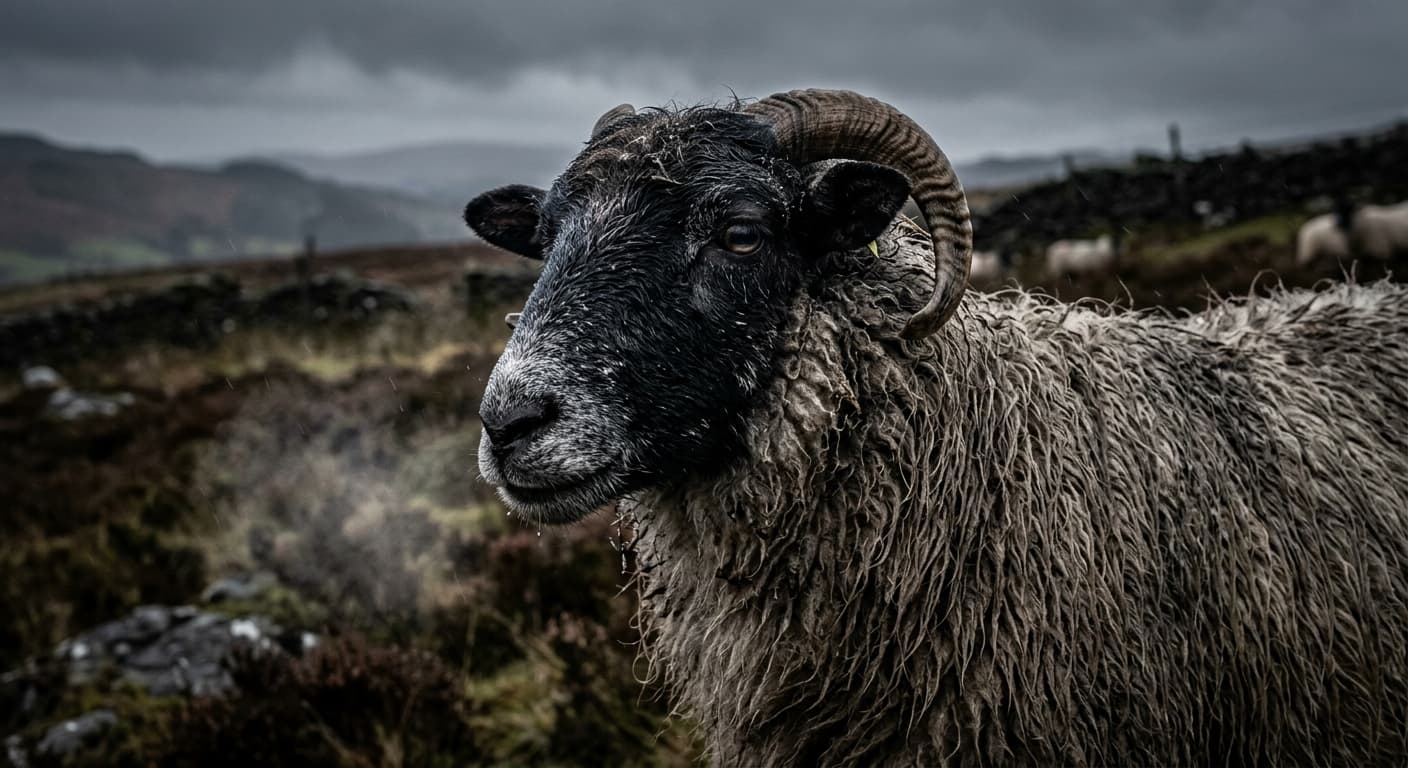
The Rough Fell Sheep: When Size Matters on the Howgills
Bigger than a Swaledale, heavier than a Herdwick, and native to the high Pennine fells around Sedbergh, the Rough Fell is the heavyweight of British hill sheep—bred large enough to survive winters that would kill smaller breeds, and still common enough that you've definitely walked past one without noticing.
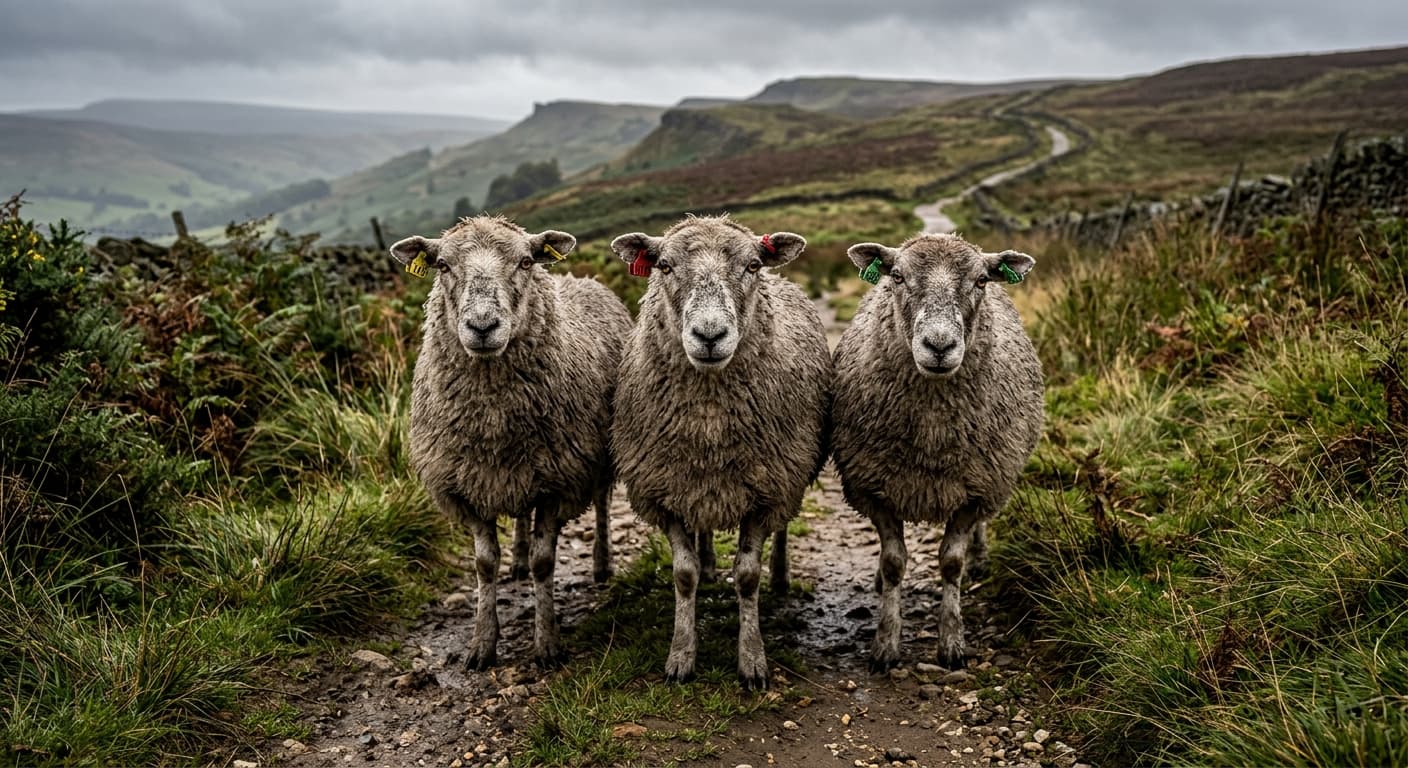
Why Sheep Stand in the Middle of Your Path (And What They're Actually Thinking)
They see you coming. They watch you get closer. And yet, the commitment to standing exactly where you need to walk remains absolute. A brief taxonomy of sheep obstinacy and the calculus behind their casual indifference.
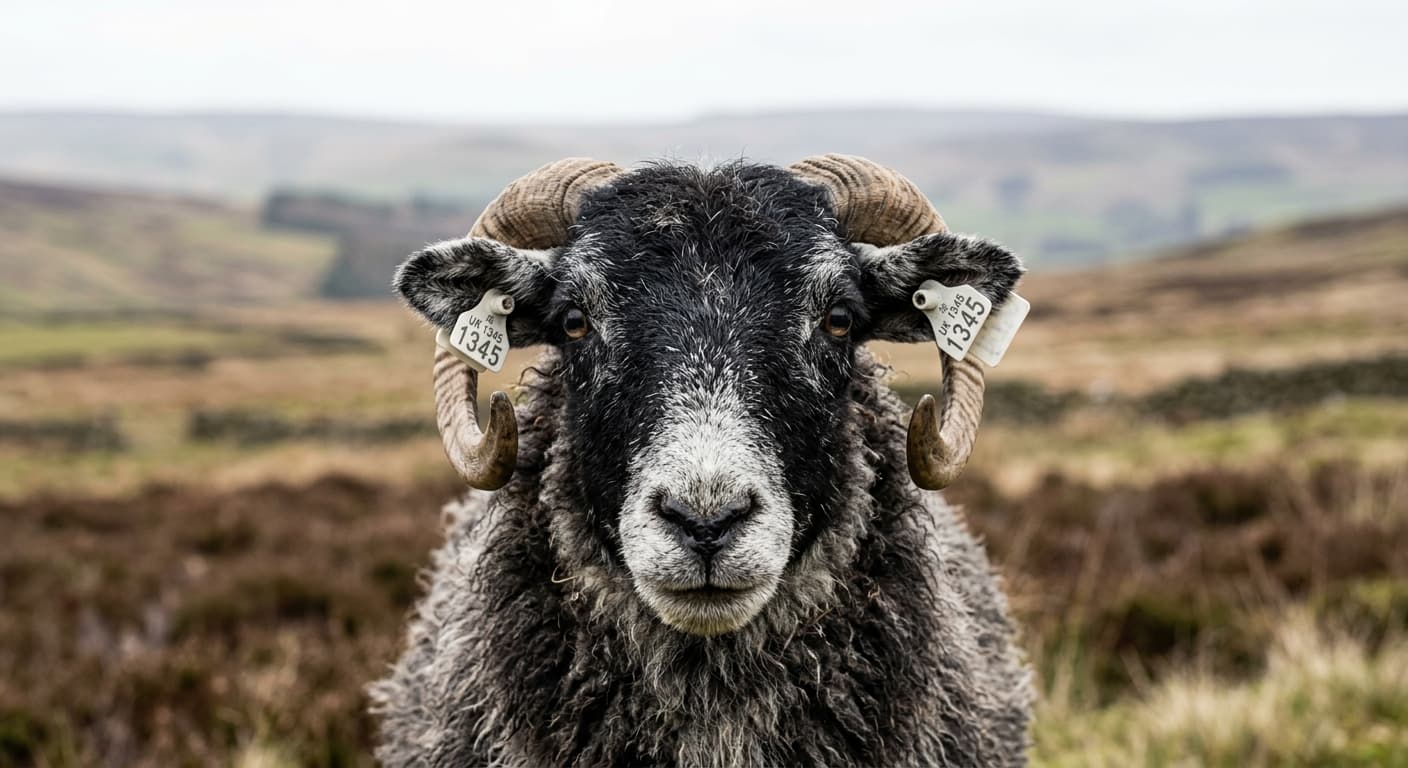
Reading Sheep Ear Tags: What the Numbers and Colours Actually Mean
Every sheep carries a statutory tag with flock and individual identifiers, but the colours aren't a universal ownership code—they're part of a regulatory system that doesn't work like a postcode. Paint marks, smit patches, and local variations do the real work of telling one farmer's sheep from another on shared fells.
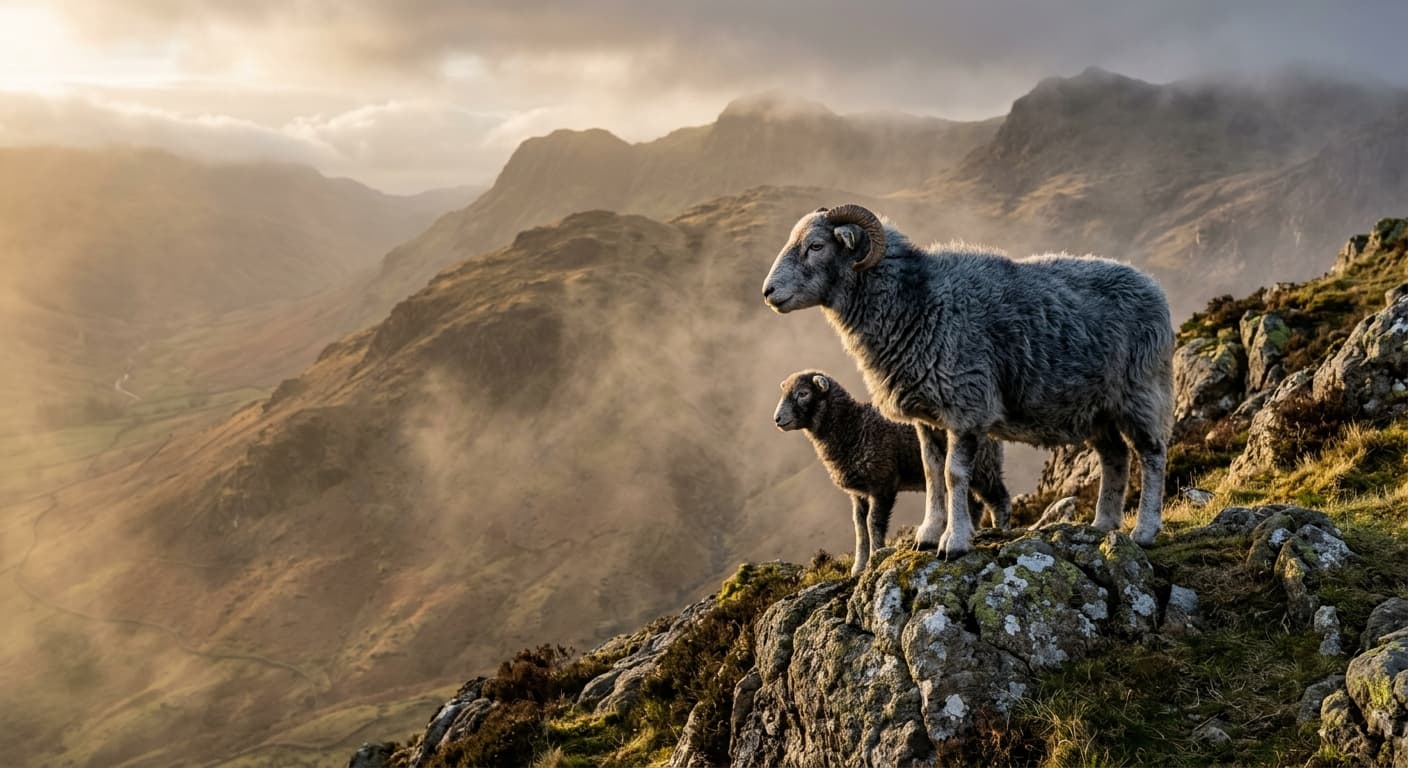
The Hefted Flock Problem: Why Some Sheep Know Exactly Where They Live
Hefted sheep inherit knowledge of their patch of fellside from their mothers—which sounds charming until you try to move them, sell the farm, or work out who's responsible when they wander during a snowstorm. It's tradition meeting livestock logistics, and neither side is winning.
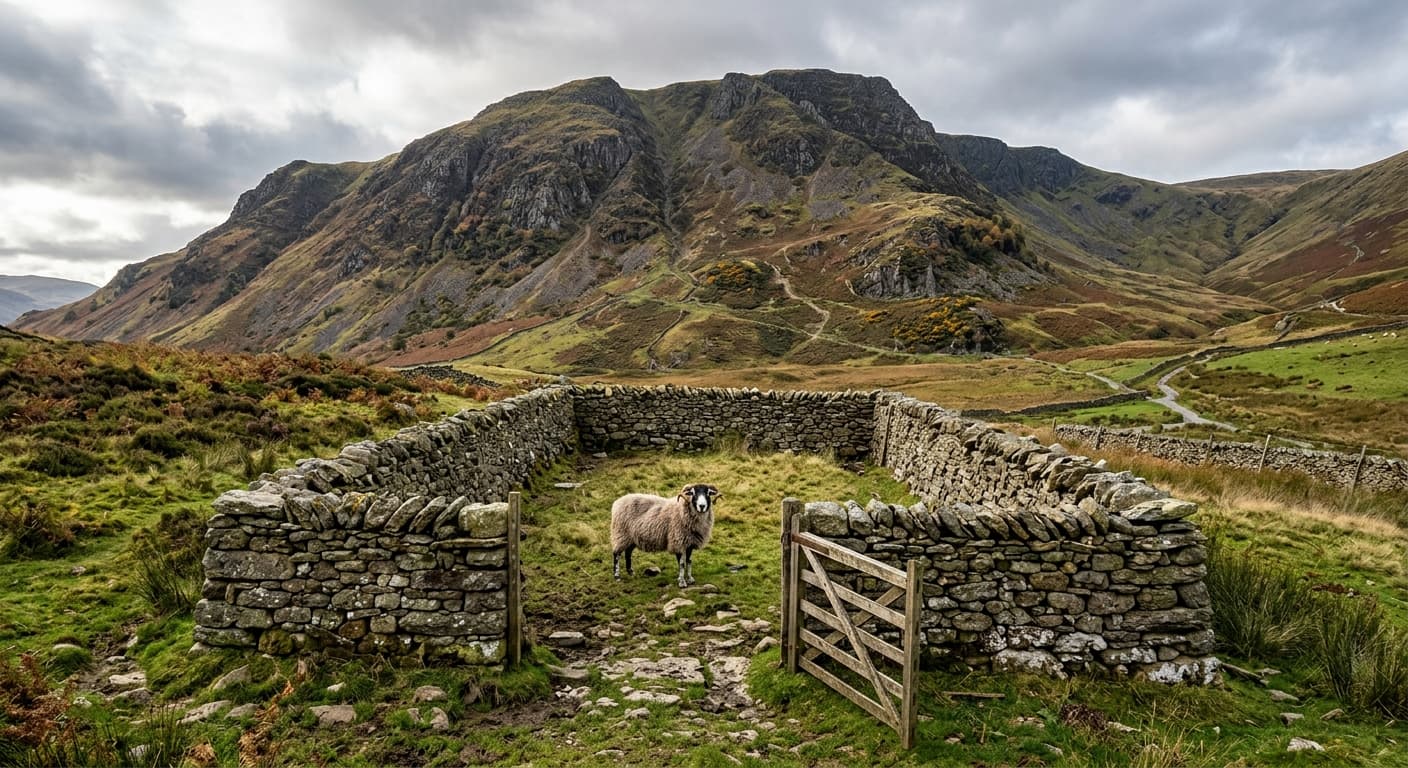
Why Sheepfolds Are Different Shapes
Sheepfolds can be circular, rectangular, irregular or divided into several pens. Their shape reflects purpose, terrain, local practice and later rebuilding — not a simple high-fell versus lowland rule.
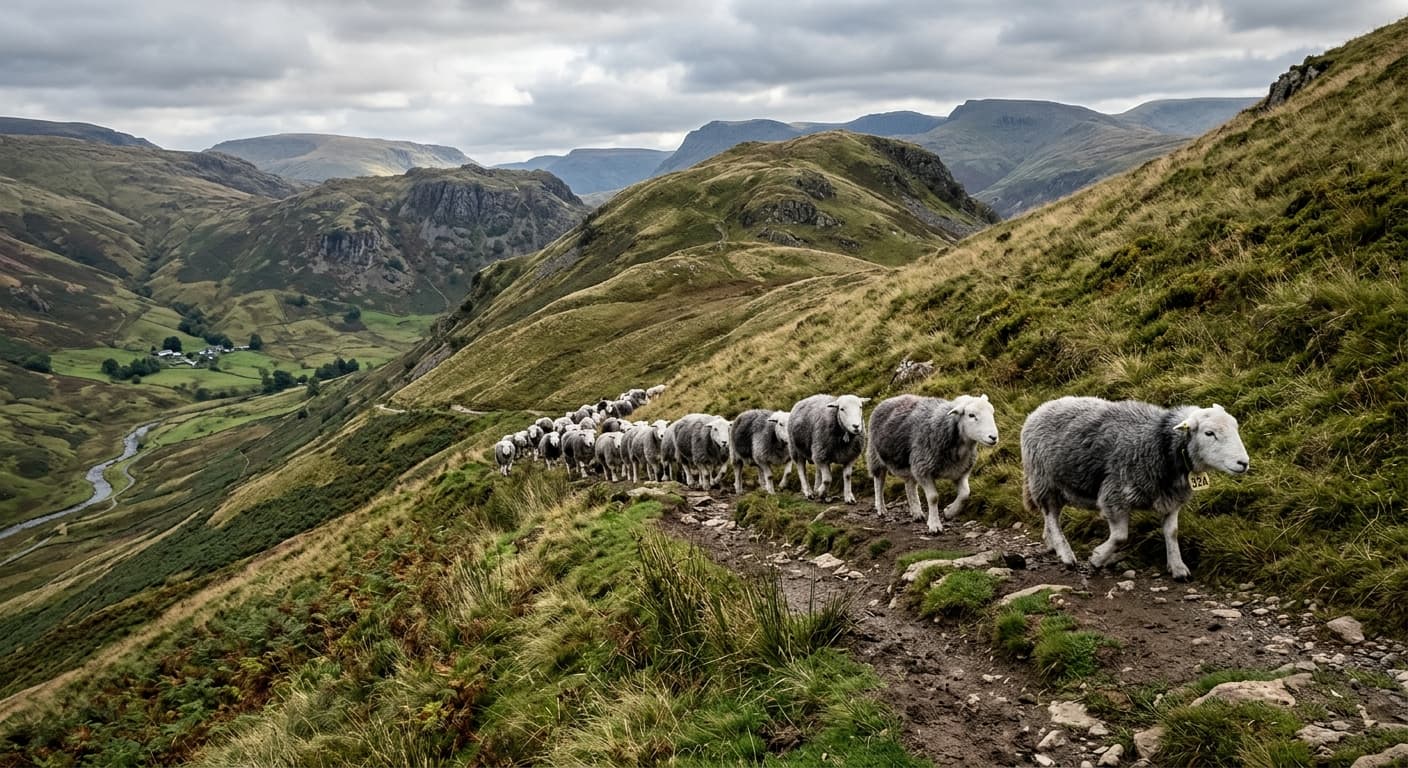
What Sheep Tracks Know That You Don't
Sheep have strong opinions about gradients and they've worn their preferences into the hillside over time. Their paths can look tempting, but they're optimised for animals with different destinations and may take you away from your planned route.

Swaledale sheep
Those black-faced sheep with bright white markings are Swaledales: hardy northern hill sheep whose ewes are central to North of England Mule breeding. Hefting is learned from ewe to lamb, and the current breed-record ram price is £105,000.

North Country Cheviot
The North Country Cheviot is a white-faced, alert hill breed with Hill and Park types. The Hill or Lairg type was developed in Sutherland; the larger Park type in Caithness. Males can occasionally be horned under the UK standard.
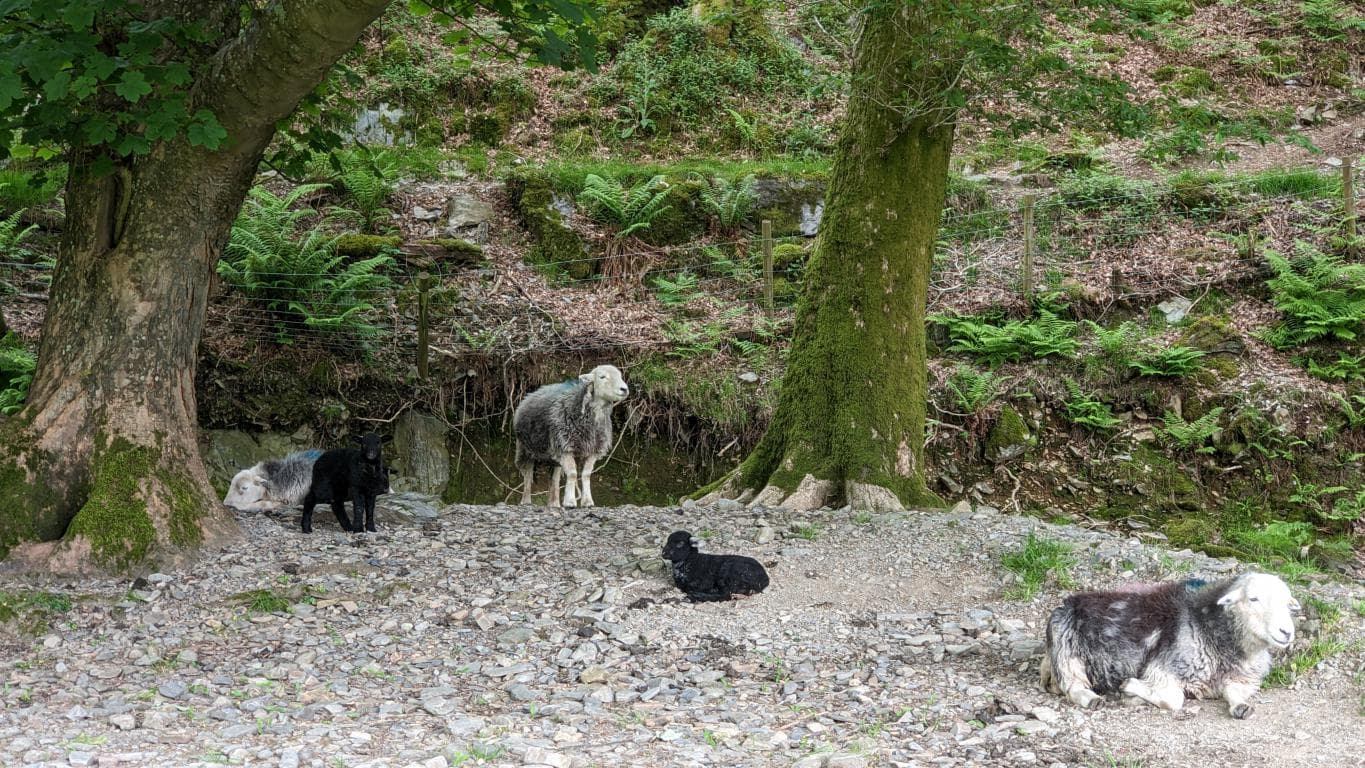
Herdwick Sheep
Herdwicks are ancient Lake District hill sheep whose hefting is learned from ewe to lamb. Norse introduction remains folklore, while genetic evidence points to an older Northern Pin Tail lineage. Beatrix Potter became an influential breeder and land donor.
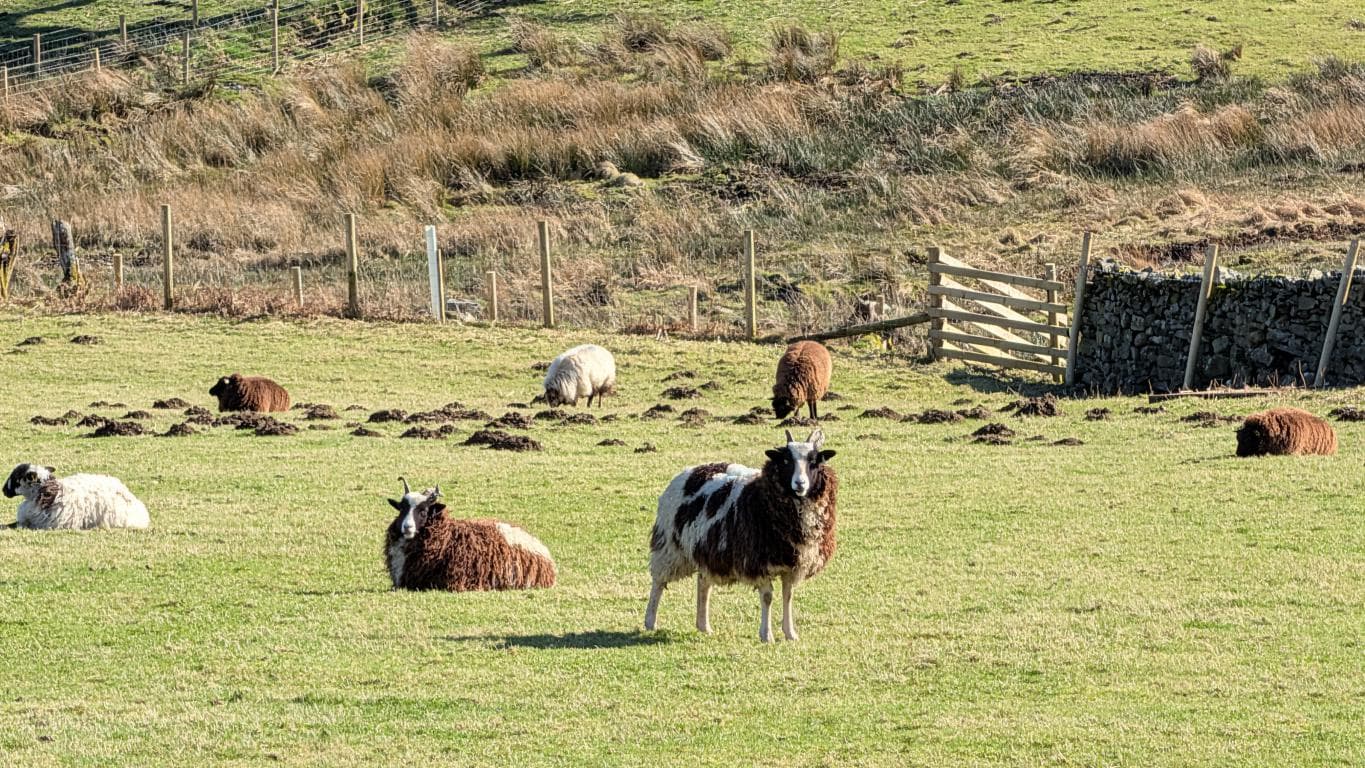
jacob sheep
Meet the spotted, multi-horned British park sheep whose exact ancestry remains uncertain. The UK breed standard requires two or four horns, black-and-white markings and no tendency to split eyelids.