6 guides
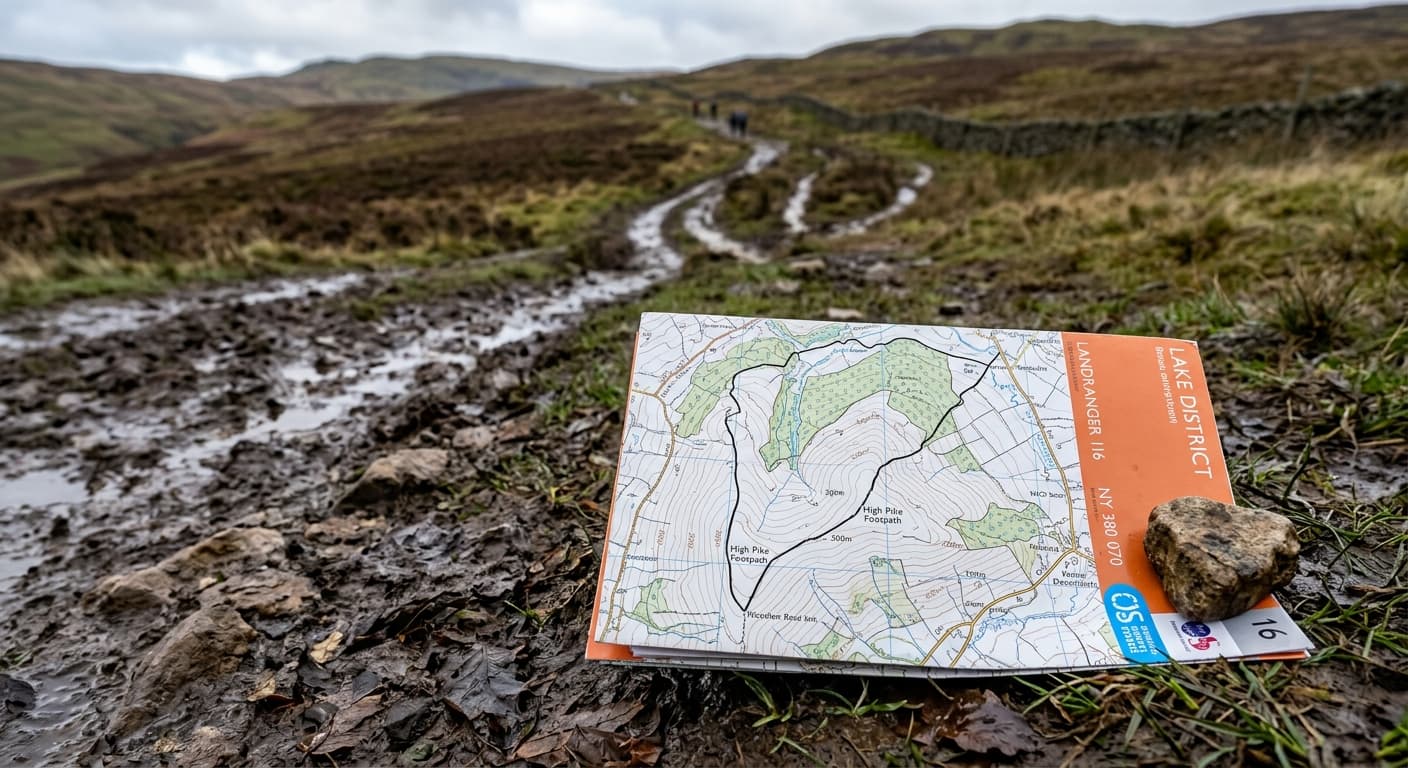
What to Do When Two Paths Look Identical and Your Map Shows Only One
When your Ordnance Survey map shows one tidy path but you're standing at a fork in the trail wondering which muddy track is the actual route, here's how to use your compass, terrain features, and a bit of path psychology to pick the right option without panicking or following strangers who might be just as lost as you are.
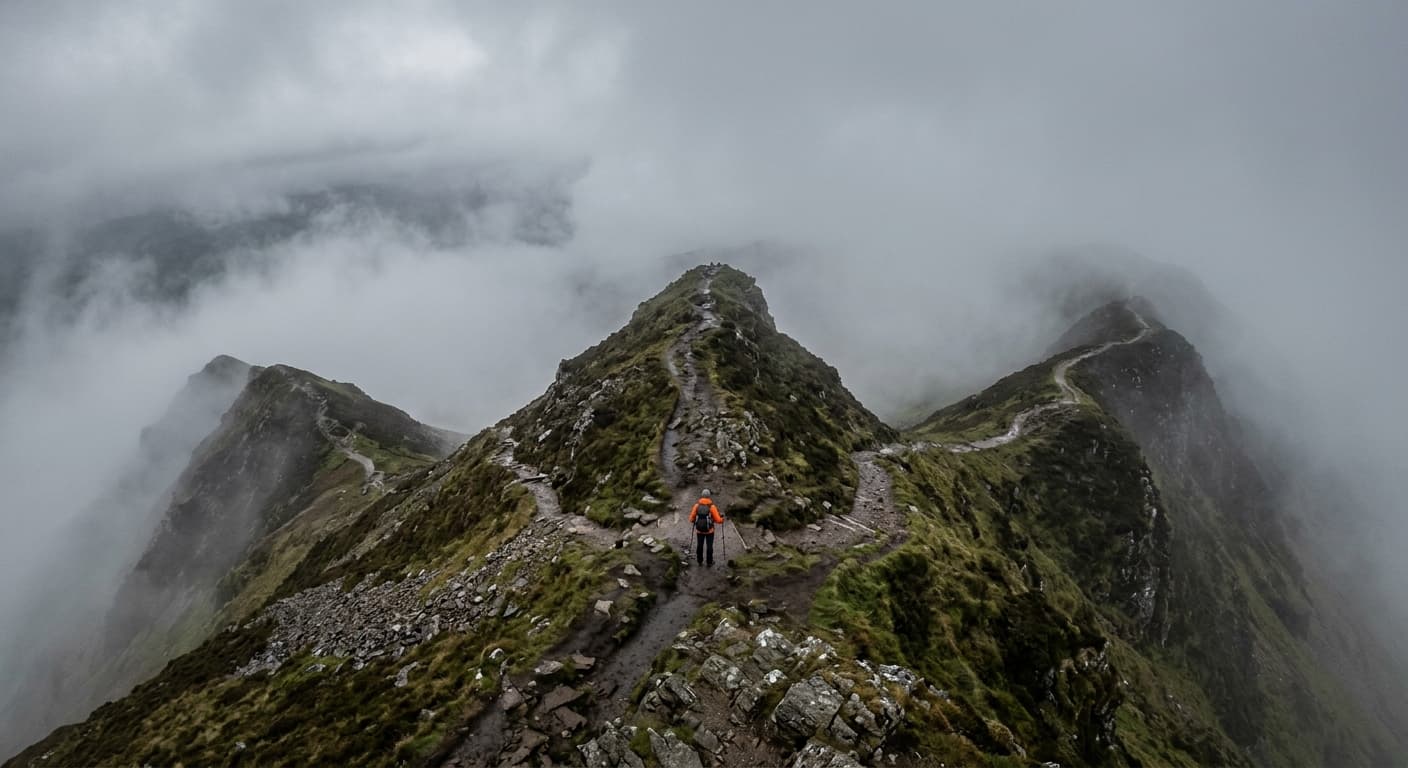
Navigating Downhill in Mist: Why Descending in Poor Visibility Is Harder Than Climbing
Descending hills in mist is considerably harder than going up because instead of funnelling toward a single point you're now spreading out from one, gravity encourages commitment before certainty, and being thirty metres off your intended line at the summit can mean you're heading down the wrong spur entirely into a valley you've never heard of.
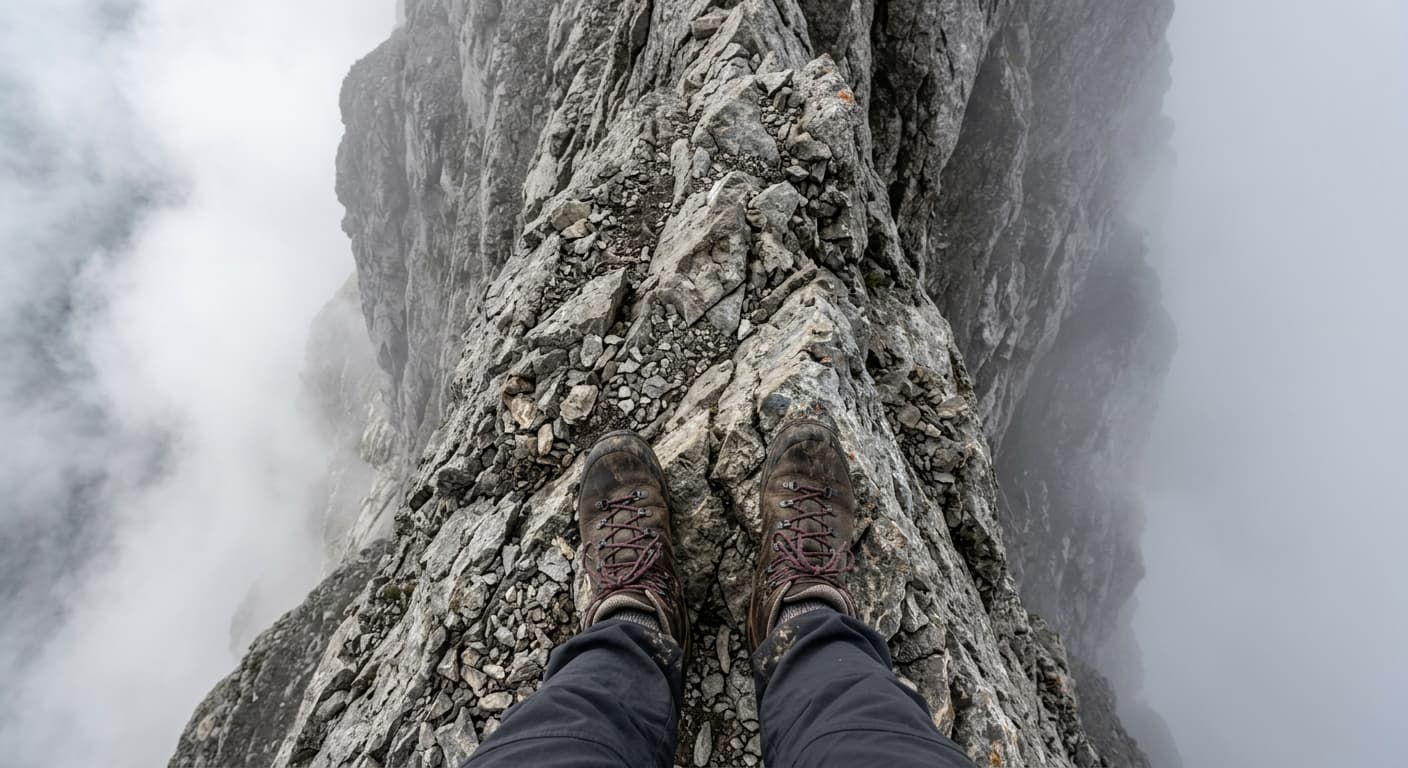
Ridge Walking for Beginners
Ridge walking can offer stunning views and an obvious line in clear weather, but exposure to wind, sudden drops and limited escape routes creates risks that do not exist on valley paths. Understanding when ridges become dangerous and how to move safely along exposed terrain helps prevent the falls and weather incidents that ridges amplify.

Should You Trust Your Phone?
Phones provide GPS positioning, detailed maps and emergency contact, but batteries can drain faster in cold weather, screens can be hard to read in bright sun and mobile coverage often disappears in valleys. Knowing when phone navigation suffices and when it doesn't prevents dangerous overreliance.

The Compass: How to Not End Up as a Local News Story
Eventually, the horizon is going to vanish and you'll have to decide if you trust your gut or the little red needle that’s actually right.

Map Reading - The Art of Not Getting Lost (Mostly)
Forget relying on the blue dot alone; here’s how to use a paper map, understand the symbols and turn hillside squiggles into a practical route back to the pub.