
Lake District
Skiddaw
930M
3052FT
About Skiddaw
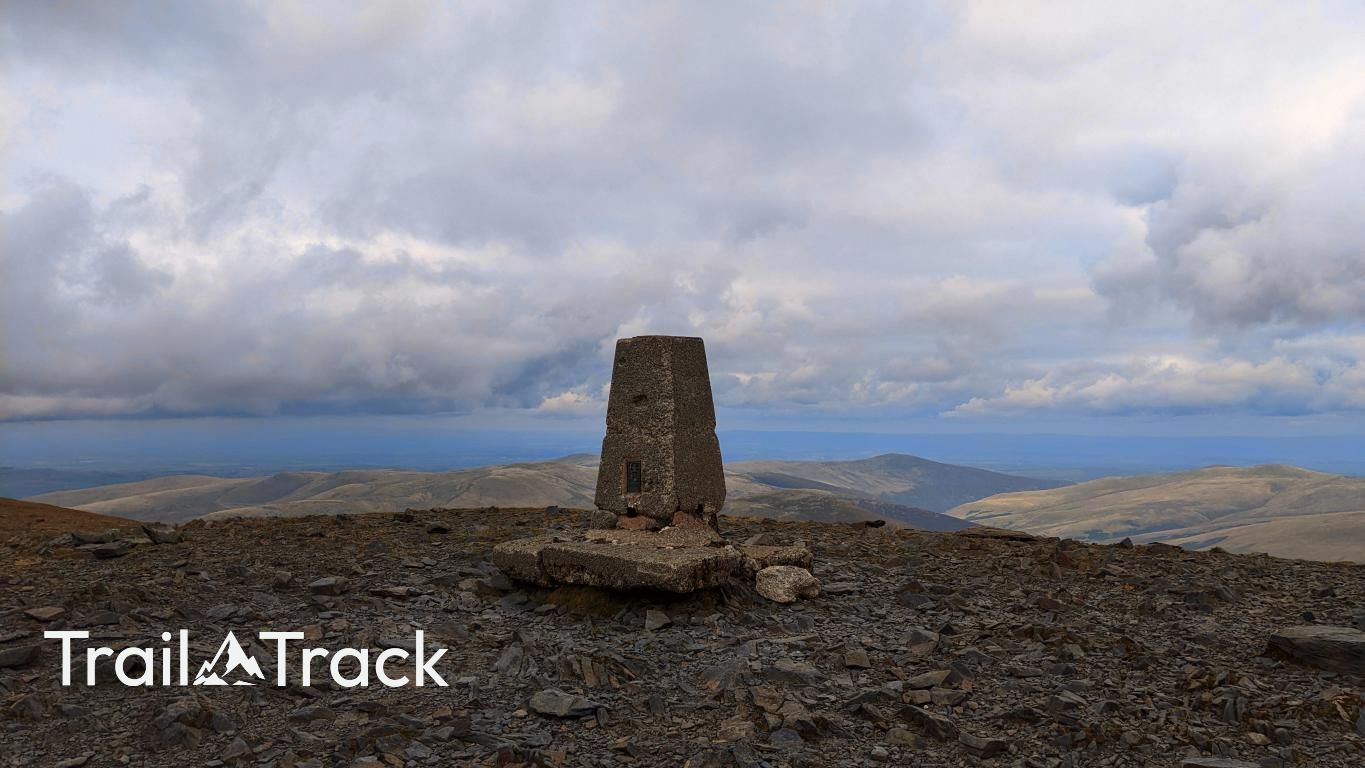
Dominating the skyline north of Keswick, this massive, slate-built giant offers a grand, accessible ascent. While the popular 'tourist path' is a steady grind, the summit ridge provides an immense sense of space. From the top, the view stretches across the Solway Firth to the distant hills of Galloway.
Key Statistics
Rank
7th Highest in Region
Parent Range
Northern Fells
Prominence
?
705.7m
Nearest Town
Applethwaite
Geology
You are walking on the Kirk Stile Formation, which is made of mudstone and siltstone from layers of ancient mud and silt.
Classifications
Find It
Latitude
54.6514°N
Longitude
3.1478°W
Did You Know?
- •The name likely derives from the Old Norse 'skyti' (archer) or 'skid' (firewood) combined with 'haugr' (hill). This Norse influence is common across the Northern Fells, reflecting the Viking sheep farmers who settled the valleys below the mountain over a thousand years ago.
- •Alfred Wainwright, who included Skiddaw in his first pictorial guide, was famously dismissive of the 'Tourist Path' from Latrigg, which he called uninteresting. He much preferred the ascent via the 'peerless' Longside Edge and Ullock Pike, which offers dramatic views over Bassenthwaite Lake.
- •The mountain is composed of Skiddaw Slates, the oldest rocks in the Lake District, dating back 500 million years. This geology gives the fell its relatively smooth, rounded profile, which stands in sharp contrast to the jagged volcanic crags of the central and southern fells.
- •In the 18th and 19th centuries, Skiddaw was a key destination for early 'picturesque' tourists. Wealthy visitors from Keswick would often be carried to the 931-metre summit on ponies, a tradition that helped establish the broad, well-engineered path still used by thousands today.
- •The summit offers a specific and famous view south over the 'Jaws of Borrowdale'. From the trig point, you can look directly down the length of Derwentwater to see the narrow gap between Castle Crag and Grange Fell, with the high peaks of Scafell Pike and Great Gable framing the distance.
- •The mountain's resonant hornfels rock was famously used to create the 'Musical Stones of Skiddaw'. In 1785, local inventor Peter Crosthwaite discovered that certain stones from the fell produced a bell-like tone when struck, leading to the construction of several large stone lithophones.
- •To mark Queen Victoria’s Golden Jubilee in 1887, locals hauled several tons of coal to the summit for a massive celebratory bonfire intended to be visible from the Scottish borders. The resulting inferno was so intense it fused the mountain’s slate into a crust of industrial clinker, proving that even a 500-million-year-old mountain isn’t entirely safe from a particularly aggressive display of Victorian patriotism.
- •The 'Tourist Path' up Jenkin Hill is the most popular route to the summit, though "popular" is often a polite way of saying "crowded." It’s a relentless trudge that is less of a wilderness experience and more of a three-hour study of a stranger’s rucksack, eventually reaching a summit where the view is largely ruined by the very people you’ve just spent the morning trying to overtake.