
Lake District
Robinson
738M
2420FT
About Robinson
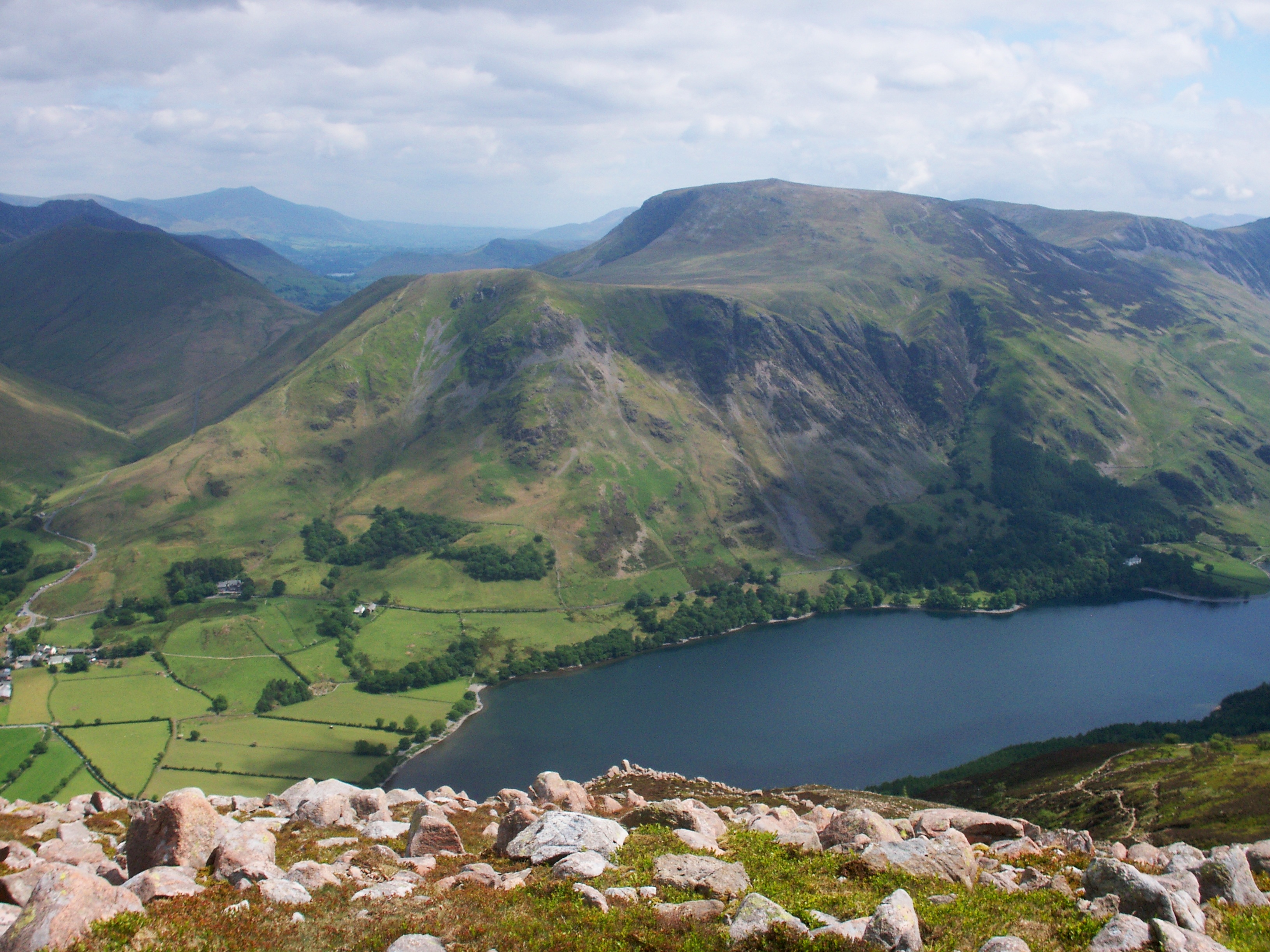
Often overlooked in favour of its craggier neighbours, this broad-backed fell provides the high-point of the ridge between Buttermere and Newlands. The ascent via the rocky steps of Blea Crags is a delightful scramble, leading to a sprawling summit plateau that offers a surprisingly airy perspective over Crummock Water.
Key Statistics
Rank
120th Highest in Region
Parent Range
North Western Fells
Prominence
?
161.9m
Nearest Town
Stair
Geology
This fell is formed from layers of sandstone and mudstone. These rocks make up the Robinson and Buttermere formations that lie beneath your feet.
Classifications
Find It
OS Grid Reference
NY201168
Latitude
54.5408°N
Longitude
3.2351°W
Did You Know?
- •The fell is unique among the Lake District heights for being named after a specific person. It is believed to be named after Richard Robinson, a local man who bought the land in the late 17th century, replacing its ancient title of 'Mellbecks'.
- •Alfred Wainwright held the fell in high regard, describing it as 'a lordly hill' when viewed from the Newlands Valley, though he cautioned that its broad, grassy summit can be a confusing place in thick mist without a compass.
- •From the summit cairn, there is a perfectly framed view down the Newlands Valley towards the distant shapes of Skiddaw and Blencathra, while the nearby Pillar and Great Gable dominate the skyline to the south.
- •For those approaching from the Buttermere side, the ascent via Blea Crags offers several short, optional rocky steps that provide a rare bit of hands-on-rock interest on an otherwise predominantly grassy fell.
- •The eastern slopes above the Newlands Valley were once a hive of activity; the Goldscope Mine at the base of the fell was one of the most productive lead and copper mines in the district during the Elizabethan era.
- •The broad, mossy plateau of the summit is so deceptively level and vast that, in a thick mist, the only way to tell you have actually reached the top is by tripping over the modest pile of stones that serves as the cairn.