
Northern Ireland
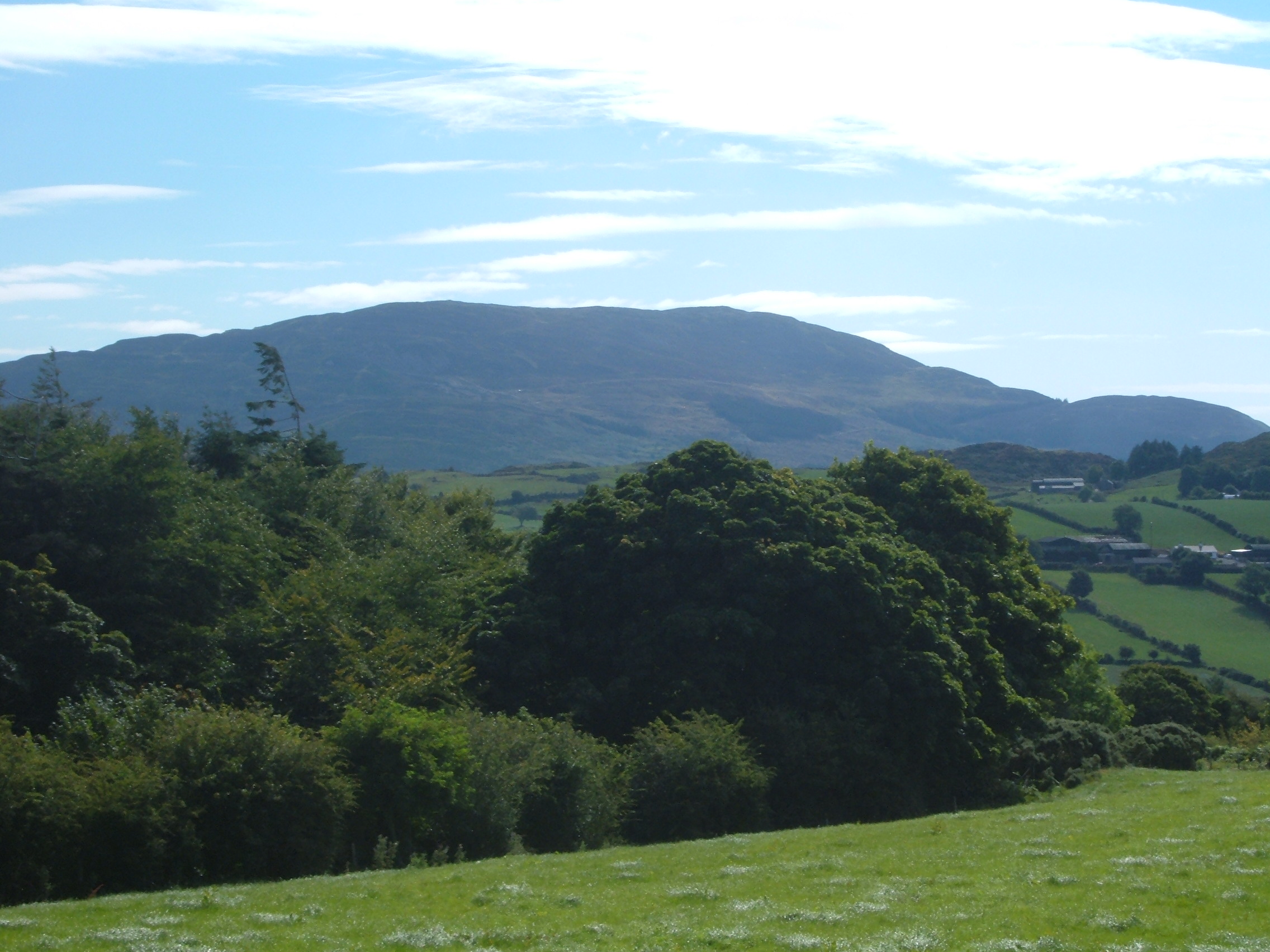
Slieve Gullion
576M
1890FT
About Slieve Gullion
Dominating the landscape of south Armagh, this ancient volcanic peak offers a unique blend of rugged heathland and deep-rooted mythology. The ascent via the forest park reveals a summit plateau home to a mysterious lake and Ireland’s highest passage grave, providing expansive views across the Ring of Gullion toward the Mourne Mountains.
Key Statistics
Find It
OS Grid Reference
J024203
Latitude
54.1219°N
Longitude
6.4334°W
Did You Know?
- •The name originates from the Irish Sliabh gCuillinn, meaning 'hill of the steep slope', or Sliabh Cuilinn, named for the legendary smith Culann. In Irish mythology, this is the site where the hero Cú Chulainn received his name and where Fionn mac Cumhaill was famously tricked into swimming in the summit lake, which turned his hair snow-white.
- •The summit is topped by two Neolithic burial cairns. The south cairn contains a passage grave—the highest of its kind in Ireland—aligned with the setting sun of the winter solstice, which illuminates the chamber deep within the mountain's crest.
- •Geologically, Slieve Gullion is the centerpiece of a world-famous ring dyke. The mountain is the eroded remains of a volcanic caldera, surrounded by a circular rampart of smaller hills that formed when a massive magma chamber collapsed millions of years ago.
- •On an exceptionally clear day, the summit provides a vantage point that spans provinces; walkers can look north to the cranes of Belfast, east to the granite peaks of the Mournes, and south across the border to the Cooley Peninsula and the distant Wicklow Mountains.
- •While many visitors use the paved drive through the Slieve Gullion Forest Park to reach the upper car park, the more satisfying walking route begins in the village of Meigh, following a steady trail through the heather to the mountain's 576m high point.
- •Local legend warns that swimming in the Calliagh Berra's Lough at the summit will turn your hair grey overnight; while modern hillwalkers are more likely to suffer nothing worse than a cold dip, it remains a very reliable excuse for avoiding the water.